DIY vs. Restaurant Meals: The Real Cost Comparison
Cooking at home costs 3-5x less per meal than dining out or ordering takeout. See the actual numbers for common dishes and learn how to make home cooking pay off.
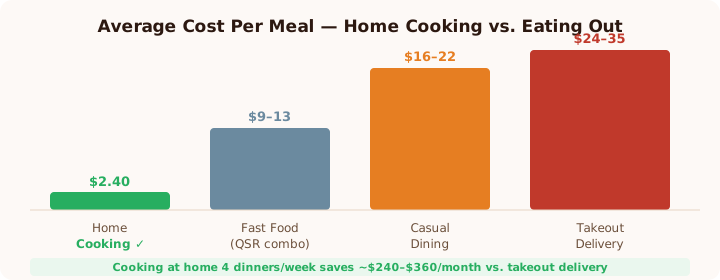
Everyone knows cooking at home is cheaper than eating out. But "cheaper" is vague. How much cheaper, exactly? And is the gap big enough to change your habits?
The numbers are more dramatic than most people expect. For common everyday dishes, cooking at home costs 3–5x less than restaurant dining and 4–6x less than takeout with delivery fees included. Over a year, the difference for a single person can exceed $5,000.
The Real Numbers: Dish-by-Dish Comparison
Let's use actual ingredient prices and restaurant menu prices for common dishes. All home cooking costs calculated using our recipe cost calculator.
Pasta with Meat Sauce (serves 2)
Home cooking cost:
- Spaghetti (6 oz dry): $0.55
- Ground beef (8 oz, 80/20): $2.80
- Canned crushed tomatoes (14 oz): $0.90
- Onion, garlic, olive oil: $0.40
- Fresh basil, salt, pepper: $0.15
- Total: $4.80 for 2 servings = $2.40/serving
Restaurant price: $16–$22 per plate at a casual Italian restaurant
Takeout price (DoorDash or Uber Eats): $18 entrée + $6 delivery + $3 service fee + tip = $30+ delivered
Home vs. restaurant: 6.7–9.2× cheaper at home
Home vs. delivery: 12.5× cheaper at home
Chicken Stir-Fry with Rice (serves 2)
Home cooking cost:
- Chicken breast (12 oz): $3.00
- Mixed vegetables (frozen, 2 cups): $1.20
- Soy sauce, sesame oil, ginger, garlic: $0.55
- Rice (1 cup dry): $0.30
- Total: $5.05 for 2 servings = $2.53/serving
Restaurant price (Chinese takeout, two entrees + rice): $28–$38 at a typical Chinese restaurant
Delivery: $35–$45 delivered
Home vs. restaurant: 5.5–7.5× cheaper
Home vs. delivery: 7–9× cheaper
Breakfast Scrambled Eggs with Toast (serves 1)
Home cooking cost:
- 3 large eggs: $0.75
- 2 slices bread: $0.30
- Butter, salt, pepper: $0.10
- Total: $1.15/serving
Breakfast diner price: $9–$14 for eggs with toast and coffee
Takeout egg sandwich: $7–$12 from a coffee shop or breakfast spot
Home vs. restaurant: 7.8–12.2× cheaper at home
Burger and Fries (serves 1)
Home cooking cost:
- Ground beef (6 oz, 80/20): $2.10
- Bun: $0.35
- Cheese, lettuce, tomato, condiments: $0.60
- Frozen fries (5 oz): $0.55
- Total: $3.60/serving
Fast food price (vs. McDonald's Quarter Pounder combo): $10.99–$12.99
Casual dining burger: $15–$22
Home vs. fast food: 3–3.6× cheaper at home
Home vs. casual dining: 4.2–6.1× cheaper at home
Salmon with Vegetables (serves 2)
Home cooking cost:
- Salmon fillet (12 oz, Atlantic): $9.60
- Asparagus (8 oz): $1.40
- Lemon, olive oil, herbs: $0.45
- Total: $11.45 for 2 servings = $5.73/serving
Restaurant price: $26–$38 for grilled salmon at a casual restaurant
Home vs. restaurant: 4.5–6.6× cheaper at home
The Hidden Costs on Both Sides
The comparison isn't quite as simple as "ingredient cost vs. menu price." There are real costs on both sides that the simple math doesn't capture.
What home cooking actually costs beyond ingredients:
Your time: A weeknight dinner takes 20–45 minutes. At a $25/hour opportunity cost (a rough proxy for an average hourly wage), 30 minutes = $12.50 in "time cost." Add that to a $3 meal and you're at $15.50, closer to restaurant prices.
But this comparison only applies if you'd otherwise be doing paid work during that time. Most home cooks are already at home in the evening, the time cost is more accurately measured as "would I rather spend 30 minutes doing something else?"
Kitchen equipment amortized: A good chef's knife ($80), cutting board ($30), pots and pans ($200), maybe $400 total in basic equipment that lasts 10–15 years. Amortized over 5 years of cooking 4 nights/week, that's $1.54/week or $0.38/meal. Negligible.
Utilities: Cooking on a gas range uses roughly $0.05–$0.15 of gas per meal. Electric: $0.08–$0.20. Add $0.10–$0.20 for any.
Total real home cooking cost for a pasta dinner: $2.40 (ingredients) + $0.15 (utilities) + let's generously say $5 for time = $7.55. Still half the cost of the restaurant and less than a quarter of delivery.
What restaurant costs actually include:
Restaurant prices reflect real overhead that isn't visible to diners. A $20 pasta dish at a restaurant pays for:
- ~$4–5 in food cost (the ingredients, same as you'd buy)
- ~$6–7 in labor (line cook, prep cook, dishwasher, server allocation)
- ~$4–5 in rent, utilities, insurance, POS systems, marketing
- ~$1–2 in supplies (linen, smallwares, cleaning)
- ~$1–2 in profit (often the smallest line item)
Restaurants are not ripping you off. They're paying for the experience, the service, and the convenience of having someone else do the work. The question is whether that's worth $14–15 to you on a given night.
The Annual Math: What the Gap Actually Means
The average American eats out or orders delivery 5.9 times per week, according to the National Restaurant Association. Let's calculate what switching some of those meals to home cooking saves.
Scenario: Replace 4 weekly restaurant/delivery meals with home cooking
Current spend (4 meals at average $18 each): $72/week, $3,744/year
Home cooking cost (4 meals at average $4/serving): $16/week, $832/year
Annual savings: $2,912
Add the meals you were already cooking and the total picture becomes significant. A single person who home-cooks 5 dinners and 5 lunches per week saves $4,000–$6,000 per year compared to eating out for all those meals.
Use our recipe cost calculator to calculate exactly what your most-ordered restaurant dishes cost to make at home. Enter the ingredients for your usual takeout order and see the real number. It's usually more surprising than expected.
When Restaurants Are Worth It
This article isn't arguing you should never eat out. There are good reasons to pay restaurant prices:
Social experience: Dinner with friends at a restaurant isn't just about the food, it's the environment, the service, the occasion. That's worth real money.
Special ingredients: Some dishes require specialty ingredients that cost $30 for a container you'll use once. The restaurant may have better access to these at lower cost due to wholesale relationships.
Skill gap: Some dishes are genuinely difficult to execute at home. A proper wood-fired pizza requires a $1,000+ oven. A proper French croissant requires 3 days and considerable practice. Paying a professional for that skill is reasonable.
Time efficiency: On a night when you're exhausted after a 10-hour day, the $15 extra to have someone else make dinner may be worth it for your mental health. That's a legitimate tradeoff.
The point isn't that restaurants are bad, it's that understanding the real cost of each meal lets you make intentional choices rather than defaulting to delivery by habit.
Getting Started with More Home Cooking
If you're trying to cut food costs, start here:
1. Identify your most-ordered meals. What do you get delivered or buy at a restaurant most often? Those are your highest-value home cooking targets.
2. Cost the home version. Use our recipe cost calculator to find out what each dish costs to make. A 4× cost difference is standard.
3. Start with batch cooking. Our batch cooking guide shows how to prep multiple meals at once so the time cost per meal drops significantly.
4. Pick seasonal ingredients. Produce in season costs 40–60% less than out-of-season. This is the single fastest way to cut ingredient costs. See our seasonal menu planning guide for what's cheapest each season.
Home cooking at its most efficient, batch-prepped, seasonally planned, with bulk staples, can bring the cost per meal down to $1.50–$3.00 for most everyday dishes. That's not deprivation cooking; it's strategic eating.
Where These Numbers Come From
- National Restaurant Association, American Dining Habits Survey 2025 (restaurant.org)
- Bureau of Labor Statistics, Consumer Expenditure Survey 2024 (bls.gov)
- USDA Economic Research Service, Food Expenditure Series (ers.usda.gov)
Ready to cost your recipes?
Use our free calculator to get total cost, food cost %, and suggested menu price in seconds.
Calculate Recipe Cost (Free) →